
Food Deserts and Urban Food Access in Kenya
A look at food security in Nairobi's informal settlements
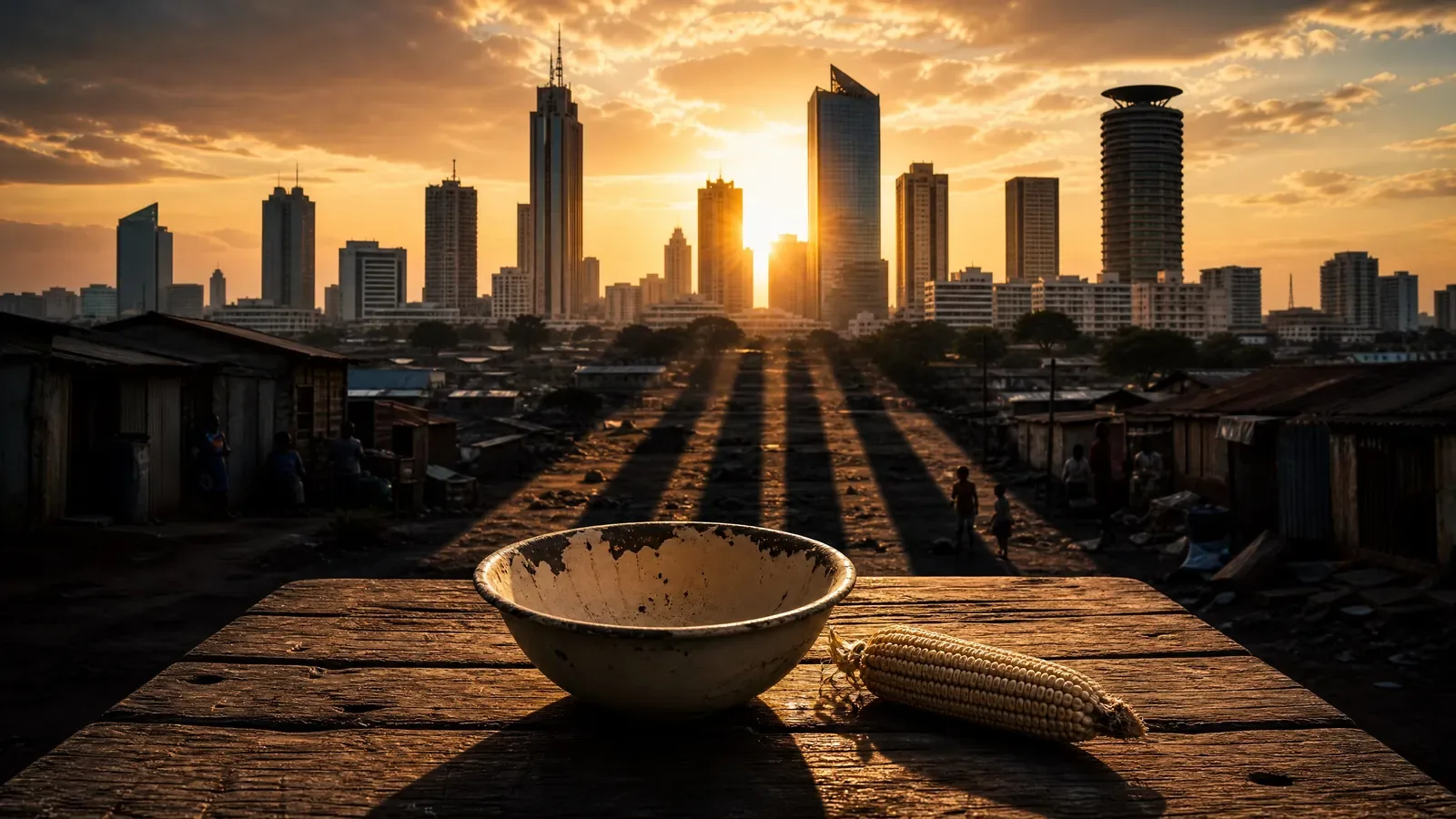
Kenya's cities are growing faster than almost anywhere else in East Africa, and Nairobi is the clearest example of what that growth looks like on the ground. As people move from rural areas in search of work, they often end up in informal settlements such as Kibera, Korogocho, Mukuru, Kawangware, and Huruma. These are some of the most densely populated places on earth, and they have become what researchers now call urban food deserts. This is a strange label at first glance, since Nairobi is full of food. Markets sell vegetables, grain, meat, and fruit every day. The problem is not that food doesn't exist in the city. The problem is that many households cannot reliably get enough of it, safely and affordably, where they live.
What Makes a Settlement a Food Desert
A food desert usually refers to an area where people have limited physical or economic access to nutritious food, even if food outlets are technically present. In Nairobi's informal settlements, this plays out through several overlapping problems. Incomes are low and irregular, so households cannot always plan or budget for meals. Housing is dense and often lacks storage or cooking space, so people buy in small, expensive quantities rather than bulk. Fresh produce and protein are often less available or more costly than starchy staples, so diets skew toward maize meal, tea, and bread. And transport within and out of these areas can be slow and costly, which limits access to larger markets where prices are better.
Research on Nairobi's slum residents has found strikingly high rates of malnutrition. One study estimated that roughly 85 percent of slum dwellers in Nairobi showed signs of malnutrition, a figure comparable to informal settlements in Addis Ababa. Among children specifically, separate research found that about 6 percent were wasted and 13 percent were underweight in Kenyan informal settlements. These numbers point to a chronic, everyday form of food insecurity rather than a single crisis event.
Evidence From Kibera and Beyond
A 2024 study conducted in Kibera, one of Nairobi's largest informal settlements, surveyed 385 households over time to understand what actually predicts food insecurity in this setting. The households scored an average of 8.00 on a household food access scale, with people originally from western Kenya scoring somewhat worse than those from other regions, at 8.32 compared to 7.94. Interestingly, the study found that having strong social connections and maintaining ties to rural areas, including farming land back home, helped some households manage food access better than others. About 43 percent of households from western Kenya were still engaged in farming in their rural home areas, and this rural link acted as a kind of safety net that softened the effects of urban poverty. Income, savings, household dependency ratios, and basic dietary knowledge also mattered a great deal in determining whether a family could stay food secure from month to month.
This idea of a rural urban food continuum is important. It shows that food security in Nairobi's slums isn't only shaped by what happens inside the city. Many residents still depend on relationships, remittances, and produce that flow in from the countryside, and when those links weaken, urban food access weakens with them.
Shocks Make a Fragile System Worse
Because so many households in these settlements already live close to the edge, external shocks tend to hit them hardest. A study following residents through the 2007 and 2008 postelection violence documented sharp increases in food insecurity when transport routes were disrupted, markets closed, and prices spiked. More recently, surveys conducted around the COVID 19 pandemic found that neighborhoods with large informal settlements, including Kibera, Huruma, and Kawangware, had far higher rates of severe food insecurity than more formal, better resourced parts of the city. One neighborhood, South C, stood out as the only community surveyed with no food insecure households, illustrating just how uneven food access is across different parts of Nairobi.
Rising fuel and energy costs add another layer to the problem. A study looking at the period after Russia's invasion of Ukraine in 2022 tracked cooking fuel use in Mukuru, one of Nairobi's largest informal settlements, and found that as gas prices rose, households cut back on clean cooking fuel and adjusted what and how often they cooked, which in turn affected food security. This shows how urban food access in Kenya is tightly linked to global commodity markets, even for people who never leave their neighborhood.
Why This Matters Beyond Nairobi
While most of the detailed research has focused on Nairobi, the same forces are likely at play in other fast growing Kenyan cities such as Mombasa, Kisumu, and Nakuru, where informal settlements are also expanding. Kenya's broader food security challenges, including drought driven crises in arid counties like Turkana, Garissa, and Wajir, tend to dominate national attention and humanitarian response. Urban food insecurity is often less visible because it doesn't look like famine. It looks like a family skipping a meal, diluting milk to make it last longer, or choosing cheaper, less nutritious food to stretch a tight budget. It is quieter, but it affects a huge number of people every single day.
Moving Toward Solutions
Addressing food deserts in Kenyan cities will likely require more than food aid. The evidence suggests that strengthening rural urban ties, supporting small scale urban agriculture, improving household incomes and savings options, and building resilience against price shocks and fuel costs could all help. Programs that specifically target informal settlements, rather than treating urban areas as uniformly food secure, are important because the data clearly shows food access varies enormously from one Nairobi neighborhood to the next. Understanding food security in Kenya means looking closely at these urban pockets of hardship, not just the country's arid rural regions where the crisis is more visible.