The Ultimate Pan-Seared Ribeye Steak
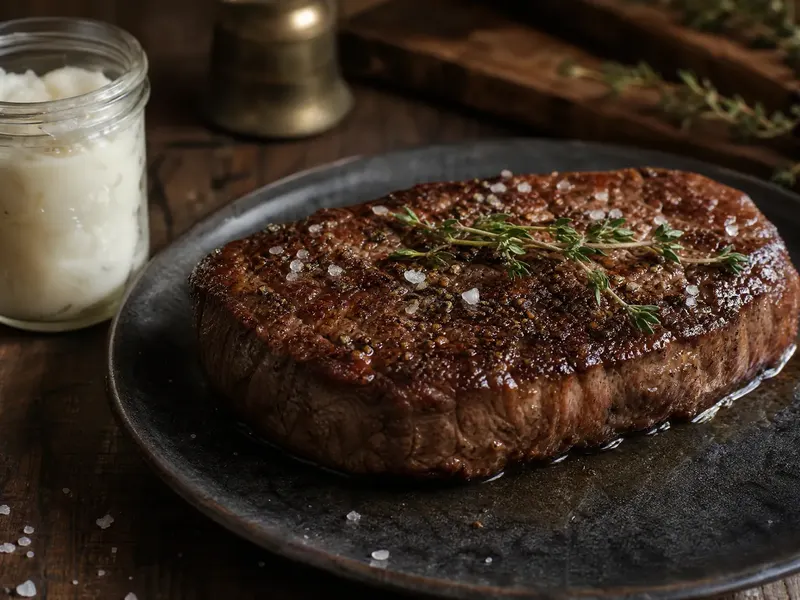
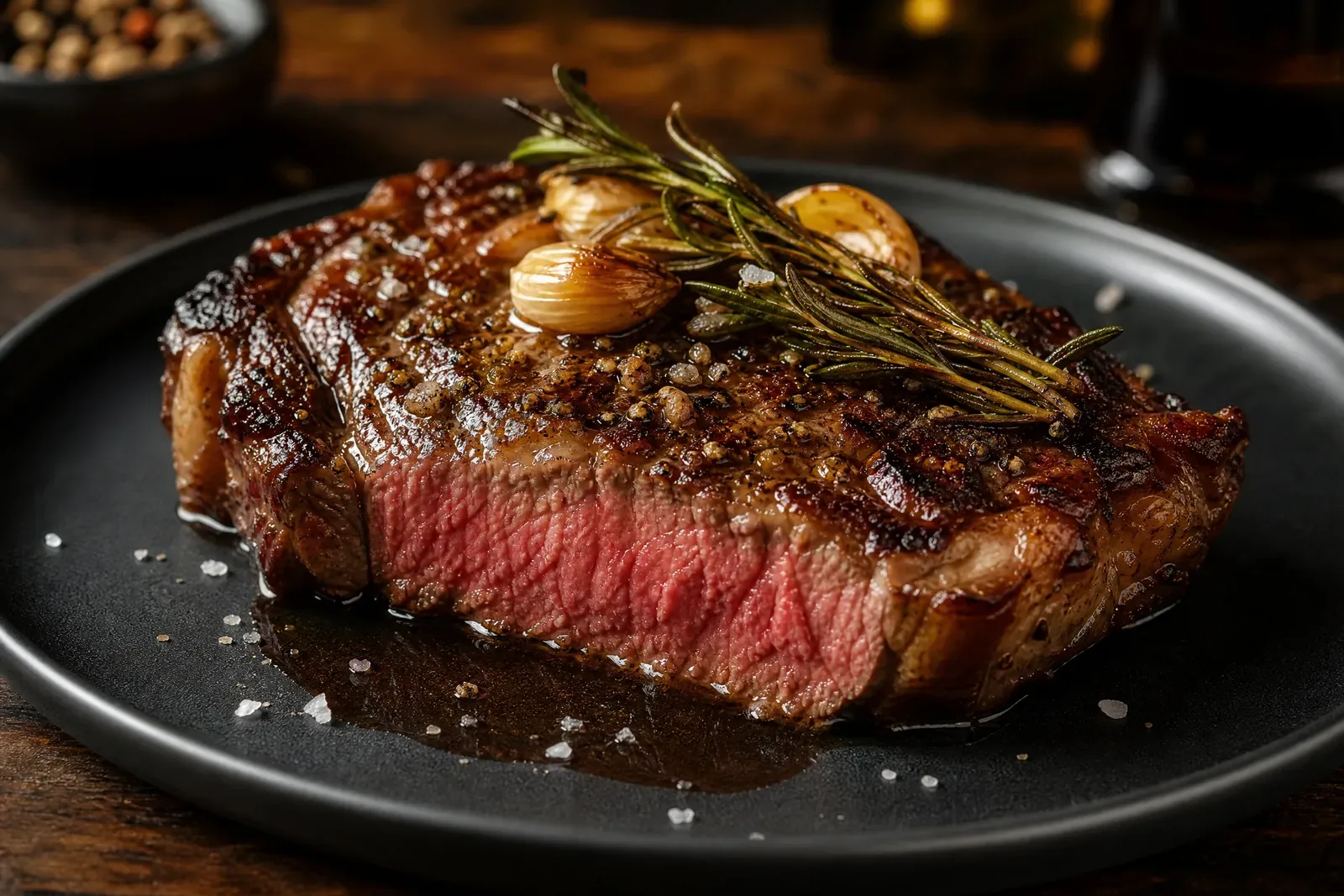
The Ribeye is widely considered the king of steaks due to its high fat content and intense marbling. To achieve a restaurant-quality result at home, the Pan-Seared and Butter-Basted method is the gold standard. This technique creates a deep, caramelized crust while infusing the meat with the flavors of garlic, fresh herbs, and nutty browned butter.
Ingredients
| Ingredient | Quantity | Note |
|---|---|---|
| Ribeye Steak | 1 (1.5-inch thick) | Choice or Prime grade, well-marbled |
| Kosher Salt | To taste | Coarse salt is best for crust formation |
| Black Pepper | To taste | Freshly cracked |
| Neutral Oil | 2 tbsp | Grapeseed, avocado, or canola oil |
| Unsalted Butter | 3-4 tbsp | High-quality European-style butter |
| Garlic | 3-4 cloves | Smashed, skins on or off |
| Fresh Herbs | 3 sprigs | Rosemary and/or Thyme |
Equipment
- Cast Iron Skillet: Essential for heat retention and an even sear.
- Instant-Read Meat Thermometer: The only way to guarantee perfect doneness.
- Tongs: For safe flipping.
- Large Spoon: For basting.
The Method: Step-by-Step
1. Temper and Dry
Remove the steak from the refrigerator 45–60 minutes before cooking. This allows the meat to come to room temperature, ensuring even cooking. Use paper towels to pat the steak completely dry on all sides. Moisture is the enemy of a good sear.
2. Season Generously
Just before cooking, season the steak heavily with kosher salt and black pepper. Don't forget the sides and the fat cap.
3. The Initial Sear
Heat your cast iron skillet over high heat until the oil begins to shimmer and smoke slightly. Carefully lay the steak into the pan (laying it away from you to avoid splashes). Sear for 2–3 minutes without moving it, until a deep brown crust forms. Flip and sear the other side for another 2 minutes.
4. The Aromatics & Basting (The Secret Step)
Reduce the heat to medium-high. Add the butter, smashed garlic cloves, and herb sprigs to the pan. Once the butter is foaming, tilt the pan slightly so the butter pools at the bottom with the aromatics. Use a large spoon to continuously spoon the hot, flavored butter over the steak for the final 2–3 minutes of cooking.
5. Check for Doneness
Use your meat thermometer to check the internal temperature at the thickest part of the steak.
| Desired Doneness | Pull Temp (F) | Final Temp (F) |
|---|---|---|
| Rare | 120°F | 125°F |
| Medium-Rare | 130°F | 135°F |
| Medium | 140°F | 145°F |
| Medium-Well | 150°F | 155°F |
6. The Rest (Crucial)
Transfer the steak to a cutting board or warm plate. Pour the remaining pan juices over it and let it rest for at least 10 minutes. This allows the muscle fibers to relax and reabsorb the juices, ensuring a tender, juicy bite.
Pro Tips
- Don't crowd the pan: If cooking multiple steaks, use two pans or cook in batches.
- Sear the fat cap: Use tongs to hold the steak upright and sear the thick edge of fat for 30 seconds to render it down.
- Quality Matters: A ribeye is only as good as its marbling. Look for "white flecks" of fat within the muscle itself.
Enjoy your perfect steak!